When drivers in Ashburn plan to sell their vehicles, they often look for effective ways to elevate their car’s value quickly. Often, they discover that High-end Paint Correction Ashburn VA delivers one of the highest returns because it transforms a tired finish into a vibrant, glossy surface that feels nearly new. In fact, buyers consistently pay more for a vehicle that looks immaculate, and prospective owners usually judge a car’s condition within seconds. Therefore, when sellers aim for the strongest resale results, they consistently choose professional paint correction because it instantly increases appeal, confidence, and perceived worth.
Although many car owners understand that shine helps sales, they rarely understand why paint correction plays such a powerful role in valuation. Because of that, this article breaks down every element clearly. You will learn what paint correction includes, how detailers execute each stage, why this service alters buyer psychology, and how your car gains real monetary value after the procedure. Moreover, you will understand how the specialists at Grizzly Auto Detailing deliver superior results using advanced tools, safe techniques, and premium products that elevate finish quality in measurable ways.
Furthermore, when you explore how dealers, inspectors, and private buyers assess a car’s condition, you will immediately see why restoring gloss improves financial outcomes more reliably than any quick cosmetic fix. Consequently, you can make an informed decision before listing your vehicle for sale. And when you prepare your car properly, you typically attract more interested buyers, reduce negotiation pressure, and close the sale faster at a higher price.
Understanding How Paint Correction Works
Although many people think of paint correction as simple polishing, the process actually removes visible defects from the clear coat through advanced mechanical refinement. Detailers eliminate swirl marks, oxidation, water spots, holograms, micro-marring, and fine scratches by leveling the clear coat with controlled abrasion. As a result, the surface becomes smooth, reflective, and crystal-clear.
However, detailers do not grind away the clear coat randomly. Instead, the specialists at Grizzly Auto Detailing inspect the paint under color-matching LEDs and swirl-finder lights. Then, they measure clear-coat depth with digital paint gauges to ensure safe correction. Because of this careful approach, your car receives precision work that preserves long-term paint health while dramatically improving appearance.
In addition, paint correction involves multiple stages. Because each step enhances clarity, the overall transformation becomes unmistakable when the job finishes.
Inspection and Planning
Technicians always begin by evaluating defect patterns across every panel. Since different panels experience different types of wear, professionals analyze each section separately. For example, horizontal surfaces like hoods and roofs typically show oxidation and etching, while vertical panels usually reveal swirl marks and light scratches. Additionally, areas behind door handles often show fingernail scuffing, and front bumpers frequently collect stone marks.
With comprehensive inspection, the technician determines whether your vehicle needs one-step, two-step, or multi-stage correction. Moreover, this evaluation ensures that no unnecessary abrasives touch the paint.
Because every detailer at Grizzly Auto Detailing maintains strict standards, they always choose a correction plan that fits your car’s age, paint hardness, defect severity, and resale goals.
Decontamination and Surface Preparation
Before any machine touches the paint, the technician removes all contamination. Otherwise, trapped debris would cause additional scratching during polishing. Therefore, your vehicle undergoes:
- A pH-balanced foam pre-wash
- Hand washing with lubricated shampoo
- Iron-remover application that dissolves embedded brake dust
- Clay-bar treatment that extracts bonded contaminants
As a result, the paint becomes perfectly clean and smooth before correction begins.
Because this thorough preparation prevents micro-marring and ensures consistent polishing results, your final finish looks sharper, glossier, and more uniform.
Cutting and Polishing Stages
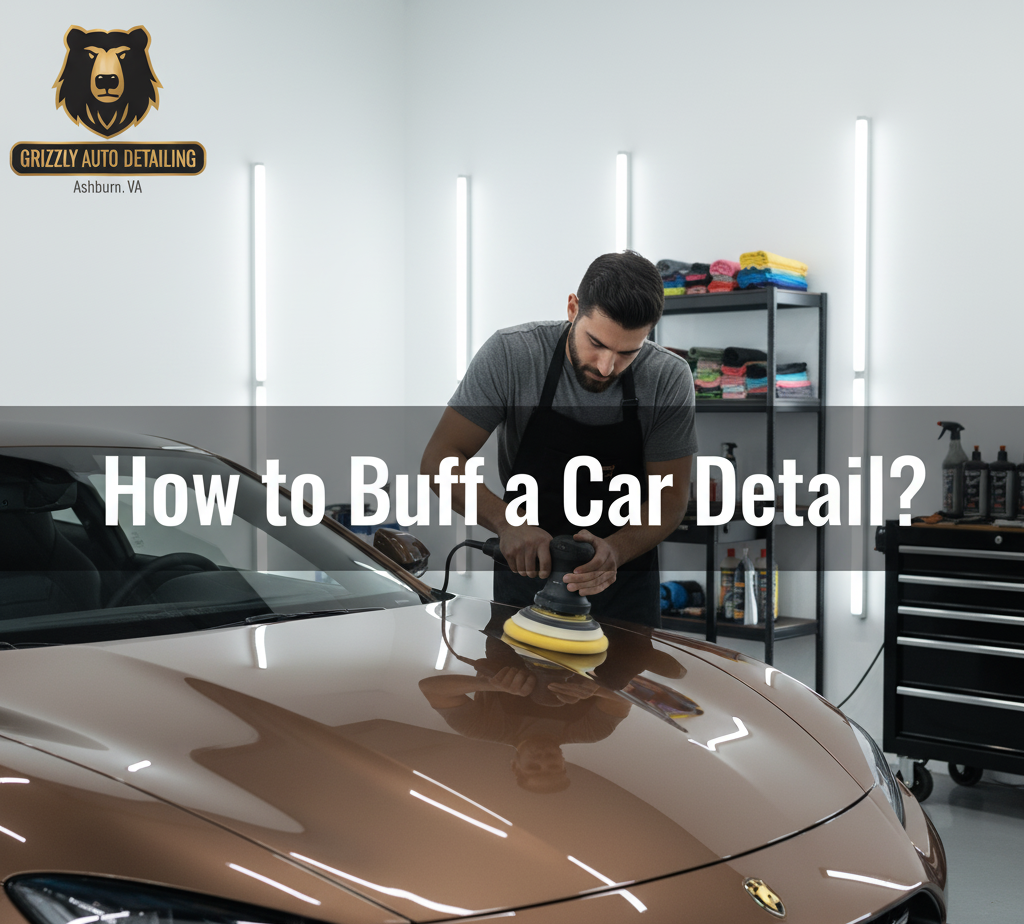
Paint correction relies on controlled abrasion, and technicians select the pads, machines, and compounds based on your paint’s condition. They use dual-action polishers for safer temperature management, and they apply microfiber, wool, or foam pads depending on the required level of defect removal.
During the cutting phase, detailers level the surface to eliminate deep imperfections. Then, during the polishing phase, they refine the finish until it gleams like glass. As a result, the paint achieves maximum clarity, depth, and reflection.
Additionally, Grizzly Auto Detailing uses industry-leading products from brands like Koch Chemie, Meguiar’s Professional Series, and Rupes. Because these products offer consistent results with minimal dust, you enjoy a superior finish without residue.
Moreover, when the correction concludes, the exterior looks dramatically fresher—often better than vehicles that sit on dealership showrooms.
How Paint Correction Boosts Resale Value
Although appearance alone influences buyers, paint correction increases resale value for several reasons that extend beyond aesthetics. Since modern buyers rely heavily on perceived condition, corrected paint generates immediate trust and confidence.
1. A flawless finish signals responsible ownership
When your paint looks immaculate, buyers assume the rest of the vehicle received similar care. Consequently, they view the interior, mechanical components, and maintenance history more positively.
Because buyers trust the overall condition, they usually negotiate less aggressively.
2. Enhanced exterior quality raises perceived market value
Potential buyers often compare vehicles visually before researching mechanical records. Therefore, a shiny, corrected finish instantly positions your car as a premium option in the market.
As a result, you can confidently list your vehicle at a higher price.
3. Professional correction eliminates years of wear
Since paint defects accumulate over time, your car may appear older than its true age. However, correction removes this visual aging. Consequently, your vehicle looks newer, fresher, and more modern.
This renewed appearance often leads to resale increases that exceed the cost of correction.
4. Buyers often favor well-presented vehicles
Most buyers choose cars that require the least additional work. Because your corrected paint needs no improvement, it becomes a more attractive purchase. Therefore, buyers feel motivated to finalize the sale quickly.
5. Paint correction prepares the car for coatings or sealants
Because detailers refine the surface during correction, your vehicle becomes ready for ceramic coating application. Ceramic coating protects the finish from UV rays, oxidation, etching, and environmental contaminants. Therefore, buyers view coated vehicles as significantly more valuable.
Why Ashburn Sellers Choose Professional Correction
When residents of Ashburn prepare their vehicles for sale, they usually want fast improvements that deliver measurable value. Since High-end Paint Correction Ashburn VA restores paint clarity instantly, sellers receive one of the best returns on appearance-based upgrades.
Additionally, Ashburn buyers generally prefer vehicles that appear well-maintained and professionally restored. Therefore, sellers who invest in correction frequently sell faster, with stronger offers and fewer last-minute negotiations.
Moreover, because Ashburn’s climate includes sun exposure, pollen accumulation, and road salt during winter, local vehicles often develop paint imperfections more quickly. Consequently, correction becomes even more valuable in this region.
Professional Tools Used for Correction
Grizzly Auto Detailing uses advanced equipment such as:
- Rupes BigFoot dual-action polishers
- Flex forced-rotation machines
- High-quality cutting and finishing pads
- Digital gloss meters
- LED swirl-finder lights
- Paint-depth gauges
With these tools, specialists deliver uniform results on every panel.
Furthermore, skilled technicians understand paint hardness differences among brands like BMW, Honda, Tesla, and Ford. Because of this expertise, each vehicle receives a tailored correction strategy that maximizes shine and safety.
Step-by-Step Example of a Full Correction Session
Below is an example of how Grizzly Auto Detailing performs a full correction for a customer preparing for resale:
- Greet the client and evaluate goals
- Inspect paint thoroughly
- Measure clear coat levels
- Rinse and foam pre-wash
- Hand wash with pH-balanced shampoo
- Apply iron remover
- Clay-bar the paint
- Tape off sensitive trim
- Perform test spot to determine ideal pad/compound
- Execute full cutting stage
- Refine with finishing polish
- Wipe down with panel cleaner
- Inspect under bright lights
- Apply paint sealant or ceramic coating
- Deliver a final walkthrough with the customer
Because this workflow ensures meticulous quality, your vehicle achieves maximum gloss, clarity, and resale impact.
How Much Value Paint Correction Can Add
Although results vary, sellers frequently earn between $500 and $2,000 more depending on vehicle age, paint condition, and market demand. Moreover, luxury vehicles often show even stronger value increases, especially when the finish regains its original depth and shine.
Therefore, the service typically pays for itself, making it one of the smartest pre-sale investments for Ashburn sellers.
Furthermore, paint correction increases online listing appeal. Since high-gloss photos attract more clicks, your car gains more attention, more inquiries, and more potential buyers.
Long-Term Benefits Beyond Resale
Although you may plan to sell your car soon, paint correction delivers additional advantages:
- Stronger protection against UV damage
- Easier maintenance
- Enhanced clear-coat lifespan
- Greater satisfaction during ownership
Because your car stays cleaner and shinier, you enjoy improved pride of ownership until the moment you sell it.
And when buyers see that your car looks stunning both in person and online, they instantly view it as a superior option—giving you exceptional leverage during price discussions.
As you evaluate your options, you will consistently find that High-end Paint Correction Ashburn VA delivers the strongest improvement with the least effort, the shortest turnaround time, and the most impressive visual transformation.
Why Choose Grizzly Auto Detailing
Grizzly Auto Detailing stands out because of:
- Extensive correction experience
- Advanced industry tools
- Premium abrasives and polishes
- Careful inspection protocols
- Transparent communication
- Tailored services for every customer
Furthermore, the team removes defects safely while preserving maximum paint thickness. Because they value long-term paint health, they treat each car as if they own it.
Additionally, their correction packages pair beautifully with ceramic coating upgrades, allowing sellers to maximize resale appearance and protection simultaneously.
Final Thoughts on Resale Value
You can dramatically elevate your vehicle’s market presence by investing in High-end Paint Correction Ashburn VA before listing it for sale. Because buyers respond emotionally to a brilliant finish, your car will stand out in online listings, attract more inquiries, and command higher offers.
Moreover, correction sets the right first impression and communicates responsible ownership. Therefore, you gain confidence when negotiating, and buyers feel confident paying a premium.
Consequently, paint correction continues to rank among the most cost-effective ways to boost resale value, especially in a competitive region like Ashburn.
When you want maximum return, you always win by choosing skilled professionals who treat your paint with the highest level of care.
As a result, you sell faster, earn more, and enjoy a smooth, profitable selling experience.
Finally, when you entrust your car to Grizzly Auto Detailing, you invest in expertise, precision, and lasting beauty—ensuring that your vehicle makes a statement the moment buyers see it.
With knowledge, technique, and craftsmanship, the specialists at Grizzly Auto Detailing deliver the kind of glossy finish that consistently elevates resale value and leaves a lasting impression.
And with the final mention, you understand why more sellers depend on High-end Paint Correction Ashburn VA when they want unmatched shine, stronger market appeal, and maximum profit from their vehicle sales.
FAQs
1. Does paint correction remove all scratches?
Paint correction removes most light and moderate scratches but cannot eliminate deep gouges that cut into the base coat.
2. How long does paint correction usually take?
Most vehicles require 4–10 hours depending on defect severity and correction level.
3. Will my paint look brand new after correction?
Yes, the surface will look dramatically clearer, deeper, and glossier, often better than showroom condition.
4. Can paint correction increase my car’s resale value?
Absolutely. Many sellers earn hundreds or thousands more due to the improved appearance.
5. Do I need ceramic coating after correction?
Coating protects the newly corrected finish and prolongs gloss, so it becomes a highly recommended upgrade.
6. How often should I get paint correction?
Most cars only need full correction once, followed by a coating or sealant for maintenance.
7. Does washing technique affect results after correction?
Yes. Safe washing preserves clarity and prevents new swirl marks.
8. Can paint correction fix oxidation?
Yes. Detailers remove oxidation and restore depth and shine during correction.
9. Should I correct paint before selling my car?
Yes. The improved appearance attracts more buyers and strengthens resale value.
10. Does paint correction work on all paint types?
Yes. Technicians adjust pads, polish, and technique for every paint system.