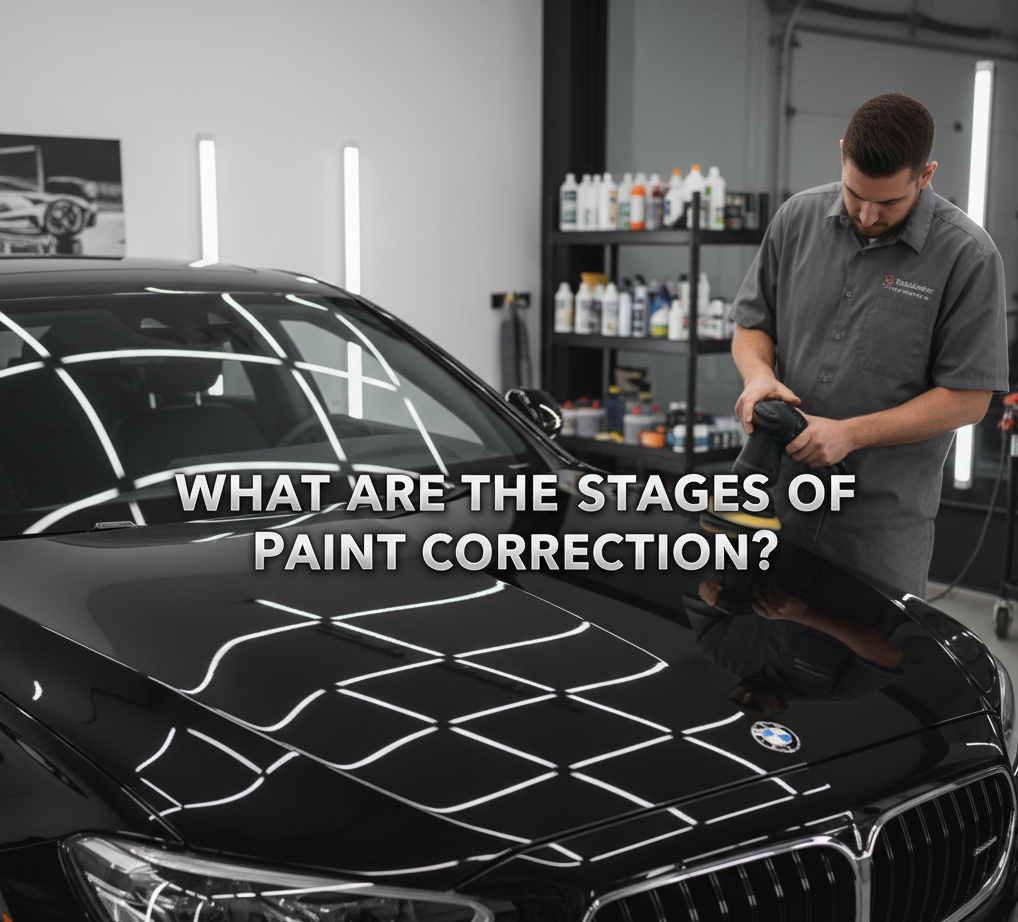
A flawless paint finish speaks volumes about how well you care for your vehicle. Over time, swirl marks, oxidation, and minor scratches can dull that original factory shine. That’s where professional paint correction steps in — a process designed to restore depth, clarity, and reflection to your car’s paintwork. For drivers seeking precision, durability, and brilliance, Certified Paint Correction in Ashburn from Grizzly Auto Detailing remains the gold standard.
Paint correction is not a single-step service but a multi-stage process requiring skill, advanced tools, and professional-grade products. Each stage refines the paint surface to achieve that deep, mirror-like gloss that car enthusiasts crave. In this guide, we’ll explore the stages of paint correction, the science behind each, and why trusting certified professionals ensures lasting results.
Understanding Paint Correction
Before diving into the stages, it’s important to understand what paint correction actually is. Paint correction refers to the professional process of removing imperfections from a vehicle’s clear coat using specialized abrasives, compounds, and polishing techniques. These imperfections include swirl marks, light scratches, water spots, oxidation, and even etching caused by bird droppings or acid rain.
When done correctly, correction doesn’t just cover up defects — it permanently eliminates them by leveling the surface of the clear coat. This is why Certified Paint Correction in Ashburn offers more than cosmetic enhancement; it delivers long-term protection and a finish that looks better than new.
The Importance of Paint Correction
Every time you wash your car with a rough sponge or go through an automatic car wash, micro-scratches form on the surface. Over time, these marks scatter light, causing dullness and a cloudy appearance. Paint correction revives that original gloss while protecting your investment.
Professional correction also extends paint life. By smoothing the surface and adding protective coatings, your car becomes more resistant to UV rays, oxidation, and dirt buildup. And since the process removes a minimal yet precise layer of the clear coat, it actually rejuvenates the surface rather than degrading it.
The 3 Main Stages of Paint Correction
While every detailer customizes their process, paint correction typically involves three major stages — compounding, polishing, and finishing. Each builds on the previous one to deliver a flawless, high-gloss result.
Stage 1: Compounding — The Heavy Defect Removal
Compounding is the most aggressive stage. It targets deep swirl marks, oxidation, and moderate scratches. Professionals use high-cut compounds paired with firm foam or microfiber pads to remove the top layer of defects.
At Grizzly Auto Detailing, technicians use rotary or dual-action polishers combined with cutting-edge products such as Meguiar’s M105 or 3D ACA 500 compounds. The key is balancing abrasion with control — too much pressure or speed can burn the paint or create holograms.
During this stage, the clear coat is leveled out carefully, revealing a smoother surface underneath. It’s normal for the finish to appear slightly hazy after compounding, which is why additional stages are crucial for refinement.
Pro Tip: Compounding should always be performed under proper lighting to reveal hidden defects. Professionals often use LED inspection lights to catch every swirl or imperfection.
Stage 2: Polishing — Refining the Surface
Once major defects are removed, polishing refines the surface to restore depth and clarity. This step uses medium- to light-cut polishes paired with softer foam pads. The goal is to eliminate haze and micro-marring from the previous compounding stage.
Professional detailers adjust the polish and pad combination based on paint type and hardness. Softer paints (like those on Japanese vehicles) require gentler products, while harder paints (common on European models) may need more aggressive polishes.
At this point, you’ll begin to see your car’s paint come alive again — vibrant, reflective, and deep in color. This step often takes the most time because professionals aim for uniform gloss and zero holograms.
Certified Paint Correction in Ashburn ensures that the polish is applied evenly using a consistent arm speed, overlapping motions, and heat management techniques. This precision minimizes friction damage and maximizes gloss output.
Stage 3: Finishing — Enhancing Gloss and Protection
The final stage is where perfection meets protection. Once the surface is fully refined, detailers apply an ultra-fine finishing polish to amplify gloss and bring out that “wet look” finish.
Afterward, protective layers such as wax, paint sealant, or ceramic coating are applied to lock in the results. Ceramic coatings, in particular, create a hydrophobic barrier that repels water, dust, and contaminants for up to several years.
Finishing transforms your car’s paint into a highly reflective, silky-smooth surface. It’s what separates an average polish job from true professional detailing. When performed by Certified Paint Correction in Ashburn experts, your paint won’t just look flawless — it will stay protected against environmental wear.
Pre-Correction Preparation Steps
Before correction begins, preparation is key. Professionals always start with a meticulous cleaning and decontamination process to ensure a perfect base. Here’s how they do it:
1. Pre-Wash and Foam Bath
A pH-neutral foam shampoo softens dirt and grime, reducing friction during washing.
2. Two-Bucket Wash Method
Using one bucket for soap and another for rinse water prevents cross-contamination.
3. Iron and Tar Removal
Iron removers break down metallic contaminants, while tar removers dissolve asphalt residue.
4. Clay Bar Treatment
This removes embedded particles that regular washing can’t. The paint becomes smooth to the touch and ready for polishing.
Skipping these steps could trap dirt during correction, leading to swirl marks or further damage.
Tools and Products Used in Paint Correction
Professional results require precision tools and products designed for different paint conditions.
Common Tools Include:
- Dual-action or rotary polishers
- Foam and microfiber pads (various cut levels)
- Paint thickness gauge
- Inspection lights
- Microfiber towels
Popular Products Include:
- Meguiar’s Mirror Glaze Series
- Menzerna Heavy Cut Compound
- 3D Car Care Products
- Chemical Guys Polishing Compounds
- CarPro Essence or Gyeon Primer for final finishing
At Grizzly Auto Detailing, only premium-grade compounds and pads are used to ensure optimal safety and gloss. The attention to detail during each stage ensures that Certified Paint Correction in Ashburn always delivers outstanding quality.
How Long Does the Process Take?
Paint correction isn’t a quick job. Depending on the car’s size, paint hardness, and defect severity, a single-stage correction might take 6–8 hours, while multi-stage jobs can extend to 15–25 hours.
The technicians at Grizzly Auto Detailing dedicate the time needed for precision rather than rushing through. That’s why their customers consistently experience professional, lasting transformations.
Paint Correction vs. Repainting: Which Should You Choose?
If your car’s paint still has a healthy clear coat, correction is often the smarter and more cost-effective choice. Repainting can cost thousands and may not match the factory finish perfectly. Paint correction, on the other hand, enhances and restores what’s already there.
However, if the paint has deep scratches down to the metal or severe oxidation, repainting specific panels may be necessary. A certified technician can assess and guide you to the best solution.
The Benefits of Certified Paint Correction
Choosing Certified Paint Correction in Ashburn means working with professionals who understand the chemistry of automotive paints. Here are the benefits:
- Precision: Certified technicians use calibrated machines and measured compounds for safe correction.
- Longevity: The results last longer and resist future damage.
- Value Retention: Your vehicle maintains a higher resale value.
- Protection: Adds resistance against UV rays, oxidation, and contaminants.
- Visual Perfection: Achieves a deep, glass-like shine that stands out anywhere.
Professional correction not only beautifies but also protects your vehicle’s paint investment for years to come.
Maintenance After Paint Correction
Once your car’s paint has been corrected, maintenance is crucial to preserve its shine. Follow these steps:
- Use the two-bucket wash method with microfiber mitts.
- Dry with soft microfiber towels to prevent swirl marks.
- Avoid automatic car washes with brushes.
- Apply a ceramic coating or wax regularly.
- Use detailing sprays between washes for added gloss.
These habits help maintain the pristine finish and reduce the need for frequent corrections.
Why Choose Grizzly Auto Detailing in Ashburn
Grizzly Auto Detailing stands as a leader in high-quality paint correction and detailing in Virginia. Their technicians are trained and certified to perform Certified Paint Correction in Ashburn with precision, care, and passion.
Using state-of-the-art equipment, environmentally safe products, and proven techniques, they deliver exceptional transformations that go beyond expectations. Whether you own a luxury car, sports coupe, or daily driver, their detailing experts ensure every inch of paint shines flawlessly.
Final Thoughts
Paint correction is an art that requires time, knowledge, and the right touch. It’s not just about polishing — it’s about restoring life to your car’s finish while ensuring lasting protection. The stages of compounding, polishing, and finishing, when performed correctly, can transform dull, tired paint into a breathtaking reflection of perfection.
If you’re serious about achieving showroom-level results, trust Grizzly Auto Detailing and their team of professionals specializing in Certified Paint Correction in Ashburn. They combine science, skill, and craftsmanship to deliver results that make every drive — and every glance — worth it.
Frequently Asked Questions (FAQs)
1. What exactly does paint correction remove?
It removes swirl marks, oxidation, light scratches, and water spots from your car’s clear coat.
2. How many stages does paint correction have?
Typically, there are three main stages: compounding, polishing, and finishing.
3. Is paint correction safe for all vehicles?
Yes, when performed by certified professionals using the correct tools and techniques.
4. How often should I get paint correction done?
Most cars only need it once unless they’re frequently exposed to harsh environments.
5. How much does paint correction cost in Ashburn, VA?
Prices range from $400 for single-stage correction to over $1,500 for multi-stage services.
6. What’s the difference between paint correction and detailing?
Detailing cleans and enhances the surface, while correction permanently removes imperfections.
7. Will paint correction damage my clear coat?
No, certified professionals remove only a minimal layer (2–5 microns) safely.
8. Can I do paint correction myself?
DIY attempts can cause more harm than good. It’s best left to certified experts.
9. Does paint correction make my car look brand new?
Yes — when done properly, it restores depth, gloss, and clarity to near-showroom quality.
10. Why should I choose Grizzly Auto Detailing?
Because Grizzly Auto Detailing provides Certified Paint Correction in Ashburn with unmatched attention to detail, cutting-edge products, and proven expertise.
