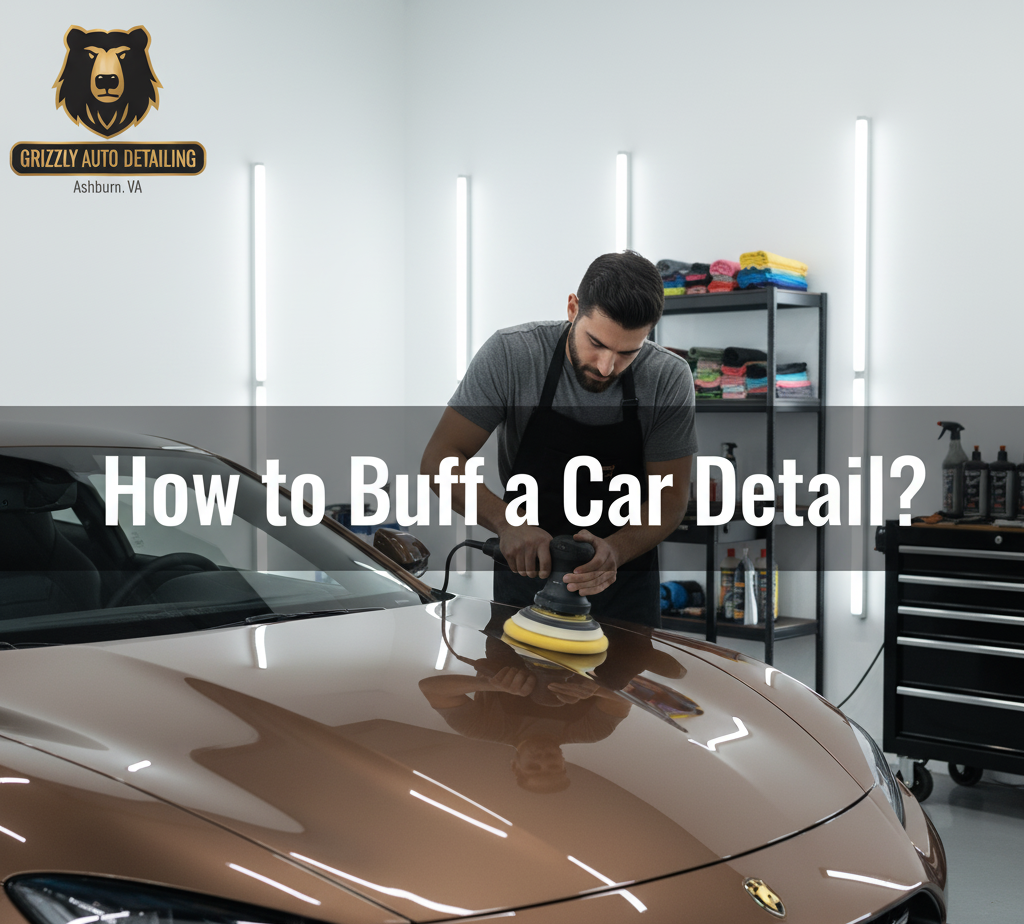
When it comes to achieving that mirror-like shine that makes your vehicle look fresh from the showroom, few techniques compare to a proper buffing job. Buffing is both an art and a science — one that requires patience, the right tools, and the correct process. At Grizzly Auto Detailing in Ashburn, VA, our experts specialize in restoring a vehicle’s finish with precision and care. If you’re searching for the ultimate guide to restoring gloss and removing paint imperfections, you’re in the right place. Whether you’re a weekend warrior or a professional detailer, this guide will walk you through everything you need to know about how to buff a car detail effectively — with proven insights from professionals in Car Cleaning Ashburn.
Understanding the Purpose of Buffing
Buffing is more than just shining a car’s surface — it’s a corrective process that removes fine scratches, oxidation, swirl marks, and other minor imperfections in the paint. Over time, environmental factors such as UV rays, rain, bird droppings, and road grime degrade a car’s finish. Buffing restores clarity and depth by smoothing the clear coat, allowing the paint beneath to shine through beautifully.
In essence, buffing bridges the gap between washing and waxing — it’s the polishing stage that makes the difference between a car that looks “clean” and one that looks truly detailed.
Tools and Materials You’ll Need
Before diving into the process, gather the right tools. Professional detailing always begins with preparation.
Essential Equipment
- Dual-action (DA) polisher or rotary buffer
- Polishing pads (foam, microfiber, or wool depending on paint type)
- Cutting compound or polish
- Microfiber towels
- Masking tape (for trim protection)
- Detailing spray or surface prep cleaner
- High-quality wax or sealant for final protection
Each item plays a role in ensuring consistent, swirl-free results. For example, a dual-action polisher is ideal for beginners because it minimizes the risk of burning paint while still achieving excellent correction. Professional detailers at Grizzly Auto Detailing rely on rotary buffers for advanced correction jobs, especially when performing full Car Cleaning Ashburn packages that include paint restoration.
Step 1: Wash and Decontaminate the Vehicle
A clean surface is crucial before buffing. Dirt or debris left on the paint can cause micro-scratches when buffed.
- Rinse the vehicle thoroughly. Remove loose dirt and grime using high-pressure water.
- Use a pH-balanced car shampoo. A pH-neutral formula prevents stripping waxes or sealants while removing contaminants.
- Two-bucket method. One bucket for clean, soapy water and one for rinsing the wash mitt ensures dirt isn’t reapplied to the paint.
- Clay bar treatment. After washing, use a clay bar and lubricant to remove embedded contaminants like tar, sap, or brake dust.
Once the surface is squeaky clean, dry it using microfiber drying towels. A fully decontaminated surface ensures your buffer doesn’t grind particles into the paint.
Step 2: Mask Delicate Areas
Before turning on the buffer, apply painter’s tape to trim, badges, emblems, or rubber seals. This prevents polish residue buildup and accidental scuffing. Masking demonstrates professionalism and attention to detail — both essential traits for high-quality results.
Step 3: Select the Correct Pad and Polish
The combination of pad and polish determines the level of correction you achieve. Understanding their roles is key:
- Cutting Pads: Used for heavy paint correction with compounds.
- Polishing Pads: Designed for moderate swirl and scratch removal.
- Finishing Pads: Used for final refinement or applying wax.
Similarly, compounds and polishes vary by aggressiveness. A good starting point is a medium-cut polish paired with a foam pad. Always perform a test spot to determine what level of correction your vehicle’s paint requires. Professionals at Grizzly Auto Detailing adjust pad and polish combinations according to each vehicle’s condition during premium Car Cleaning Ashburn services.
Step 4: Prime the Pad
Before applying polish to the car’s surface, prime the pad. This step ensures even product distribution and prevents dry buffing, which can create micro-marring.
- Apply a few small pea-sized dots of polish to the pad.
- Spread it gently across the section you’ll work on before activating the machine.
- Lightly press the pad against the surface to evenly coat the area.
Proper priming leads to consistent correction and minimizes friction between the pad and paint.
Step 5: Work in Small Sections
Buffing isn’t about speed — it’s about control. Work in manageable sections (2’x2’) to maintain consistency and prevent the polish from drying prematurely.
- Spread the polish evenly over the section with the machine off.
- Set the buffer at low speed to spread the product.
- Gradually increase the speed to about 4–5 on a DA polisher (or 1,200–1,500 RPM on a rotary).
- Move the pad in overlapping passes — first horizontally, then vertically — to ensure even coverage.
Keep the pad flat and apply light to moderate pressure. Let the machine’s motion and the polish do the work — not brute force. The goal is to refine the surface, not grind it down.
Step 6: Inspect and Wipe Down
Once you’ve completed a section, stop buffing and inspect the finish. Use a clean microfiber towel and a detailing spray or panel wipe to remove polish residue. Examine the paint under bright lighting.
- If the defects persist, repeat the process using a slightly more aggressive pad or compound.
- If the surface looks glossy and smooth, move on to the next section.
Buffing requires patience — taking time to evaluate your progress ensures flawless results.
Step 7: Perform a Final Polish
After the correction stage, perform a final polish with a softer pad and finishing polish. This refines the paint, enhances depth, and creates that wet-look shine enthusiasts love.
Professional detailers often use ultra-fine finishing compounds to achieve mirror clarity. This final step is what separates an average detail from a show-quality finish.
Step 8: Apply Wax or Sealant
Buffing removes minor imperfections, but it also removes any existing protective layers. Once you’ve achieved the desired finish, protect it immediately with a wax, sealant, or ceramic coating.
- Carnauba wax offers a warm, deep glow but requires frequent reapplication.
- Synthetic sealants provide long-lasting protection and enhanced water beading.
- Ceramic coatings deliver ultimate durability, often lasting years when applied correctly.
At Grizzly Auto Detailing, we recommend ceramic coatings for customers seeking the longest-lasting shine and protection as part of comprehensive Car Cleaning Ashburn services.
Step 9: Maintain the Buffed Finish
Your freshly buffed car deserves proper care. Avoid harsh cleaners or automatic car washes, which can reintroduce scratches. Instead:
- Wash using the two-bucket method.
- Use microfiber towels and gentle drying techniques.
- Apply quick detailer sprays between washes to maintain gloss.
- Reapply wax or sealant every few months to preserve protection.
With regular upkeep, your car will maintain its brilliant shine for months.
Expert Tips from Grizzly Auto Detailing
- Avoid direct sunlight. Heat causes polish to dry too quickly, making it difficult to work.
- Check pad cleanliness often. A clogged pad can create micro-marring and reduce effectiveness.
- Use a swirl-finder light. This reveals imperfections invisible under normal lighting.
- Work slowly. Buffing is a marathon, not a sprint. Precision always wins over haste.
- Always start mild. Begin with the least aggressive combination before increasing cutting power.
Grizzly Auto Detailing technicians in Ashburn are trained to evaluate each car’s paint condition and tailor the process accordingly. Their approach ensures maximum shine without compromising the integrity of the paintwork.
Common Mistakes to Avoid When Buffing
Even seasoned enthusiasts can make errors that hinder results. Be mindful of these common pitfalls:
- Using too much polish: Excess product leads to residue buildup and inconsistent correction.
- Skipping surface prep: Buffing over dirt scratches the paint.
- Overheating the surface: Applying too much pressure can burn the clear coat.
- Neglecting edge control: Edges are thinner and require delicate handling.
- Failing to protect afterward: Without a protective layer, the finish quickly degrades.
Avoiding these mistakes ensures your hard work produces professional-grade shine every time.
How Often Should You Buff Your Car?
Buffing is not a weekly or monthly procedure. The frequency depends on factors such as your driving environment, paint type, and maintenance routine.
For most cars, buffing once or twice a year is sufficient. Over-buffing can thin the clear coat, so always aim for correction only when necessary. If your vehicle undergoes professional detailing with Grizzly Auto Detailing, our specialists assess paint thickness to ensure safe and effective polishing during any Car Cleaning Ashburn service.
Professional vs. DIY Buffing
While do-it-yourself buffing can yield impressive results, professional detailing offers advantages worth considering:
| Aspect | DIY Buffing | Professional Buffing |
|---|---|---|
| Cost | Lower initial cost | Higher upfront investment |
| Tools | Limited to consumer-grade | Industrial-grade buffers and products |
| Finish Quality | Good with practice | Showroom-quality shine |
| Risk | Potential for mistakes | Expert control and safety |
| Durability | Shorter-term results | Long-lasting protection |
Professionals like those at Grizzly Auto Detailing combine experience, premium materials, and precision techniques to ensure your car’s finish looks its best — safely and efficiently.
Final Thoughts
Buffing a car detail is one of the most satisfying aspects of automotive care. When done correctly, it transforms dull, tired paint into a reflective, flawless surface that turns heads wherever you go.
By following the steps outlined above — from washing and decontamination to final protection — you can achieve results that rival professional shops. However, if you desire the ultimate, risk-free experience with guaranteed perfection, consider booking a service with Grizzly Auto Detailing in Ashburn, VA.
Their certified professionals use state-of-the-art equipment and proven detailing systems to deliver unmatched gloss, depth, and protection — making your vehicle look better than new.
FAQs About Buffing a Car Detail
1. How long does it take to buff a car properly?
A full-car buff can take anywhere from 3 to 6 hours depending on the size of the vehicle and the extent of paint correction needed.
2. Can I buff a car by hand?
Yes, but machine buffing provides far better results. Hand buffing is ideal only for spot polishing or applying wax.
3. What’s the difference between buffing and polishing?
Polishing is part of the buffing process — it uses abrasive compounds to smooth the paint, while buffing refers to the entire correction stage.
4. How do I know if my car needs buffing?
If you notice dullness, oxidation, or swirl marks that don’t disappear after washing, it’s time to buff.
5. Can buffing remove scratches?
Yes, light surface scratches and swirl marks can be removed through buffing, but deep scratches may require professional repair.
6. Is buffing safe for clear coat paint?
When performed correctly, yes. Over-buffing or using excessive pressure can thin the clear coat, so moderation is key.
7. How much does professional buffing cost?
Professional buffing costs vary by location and vehicle size but typically range from $150 to $400 for standard vehicles.
8. How often should I wax after buffing?
Reapply wax or sealant every 2–3 months to maintain the protection and gloss achieved through buffing.
9. What type of polish should beginners use?
Start with a medium-cut polish and a foam pad — this combination is forgiving and effective for most paint types.
10. Does buffing help resale value?
Absolutely. A well-buffed, glossy vehicle signals proper maintenance, which can increase resale appeal and value.