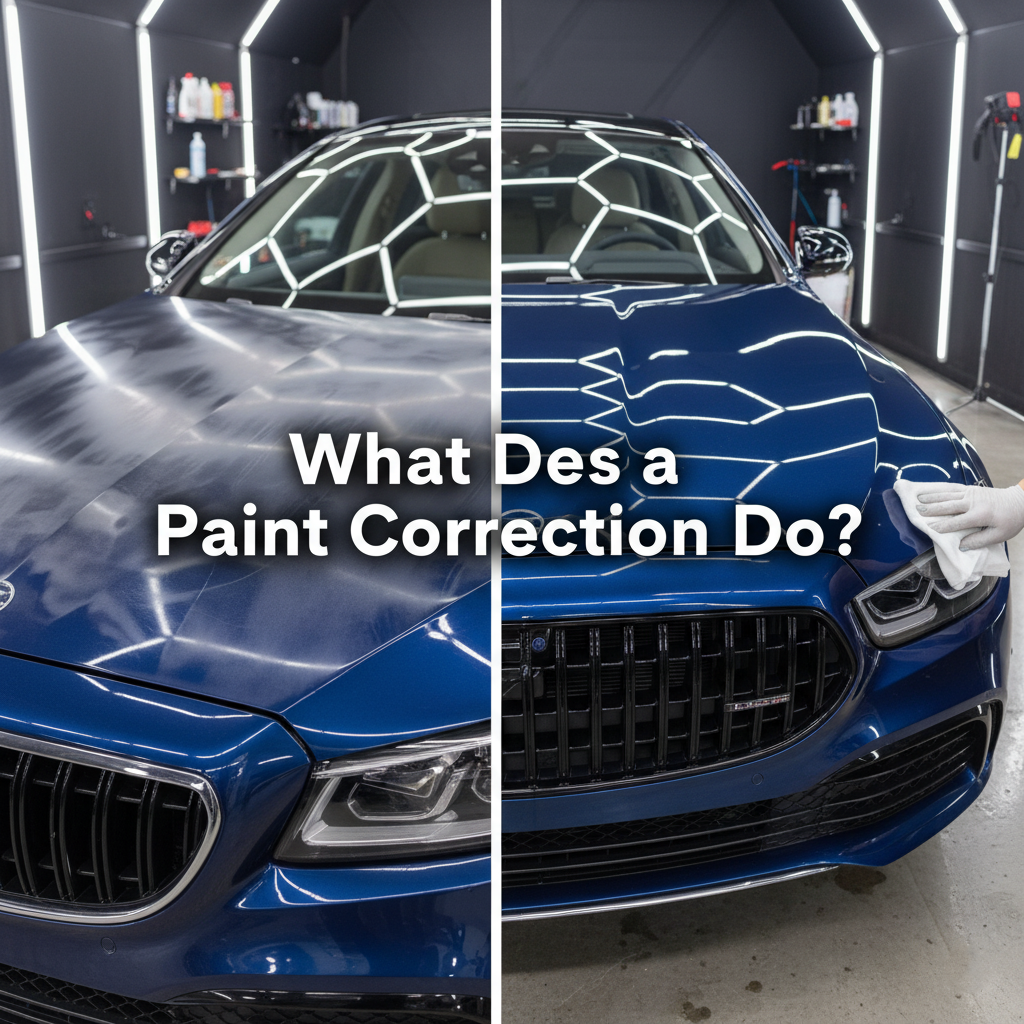
When your vehicle’s paint begins to look dull or scratched, you need the Best Paint Correction in Ashburn to restore its original shine. At Grizzly Auto Detailing, we provide a precise, step-by-step process that removes imperfections while enhancing gloss and depth. In this guide, we explain how paint correction works, why it matters, and how to maintain your car’s finish after treatment.
What Is Paint Correction?
Paint correction is a professional detailing process that eliminates visible defects from your car’s paint surface. It removes swirl marks, minor scratches, oxidation, water spots, and haze. Unlike temporary surface treatments, paint correction physically refines the clear coat, restoring the finish to near-showroom quality.
By understanding how paint correction works, you can make an informed choice. Skilled technicians, like those at Grizzly Auto Detailing, combine expertise with advanced tools to achieve consistent results without damaging your paint.
Why Paint Correction Matters
1. Restores Shine and Depth
Over time, daily wear causes swirls, micro-scratches, and oxidation. Paint correction removes these defects and enhances depth and gloss. Consequently, your car regains its vibrant, “wet-look” finish.
2. Protects and Prepares for Coatings
Paint correction prepares your vehicle for ceramic coatings, wax, or paint protection film (PPF). Removing surface defects ensures that protective layers adhere evenly, which maximizes their effectiveness.
3. Boosts Vehicle Value
A car with a flawless finish signals excellent maintenance. Paint correction improves aesthetic appeal, which can increase resale or trade-in value.
4. Extends Paint Life
By removing oxidation and minor imperfections, paint correction slows future paint degradation. It also makes ongoing maintenance more manageable, saving time and effort over the long term.
Step-by-Step Process at Grizzly Auto Detailing
Step 1: Paint Inspection
We examine your car under bright, controlled light. This inspection identifies swirl marks, scratches, water spots, and haze. We also measure paint thickness to customize the correction plan.
Step 2: Thorough Washing and Decontamination
First, we wash your car with pH-balanced soap. Then, we remove bonded contaminants with clay bars and iron removers. Cleaning thoroughly prevents polishing defects from worsening.
Step 3: Masking Sensitive Areas
We carefully mask trim, emblems, glass, and rubber. Masking ensures the polishing process focuses only on paint and prevents accidental damage.
Step 4: Correction – Cutting and Polishing
We tackle defects using a multi-stage approach:
- Cutting stage: We apply a cutting compound with a high-performance pad to remove deep swirl marks and scratches.
- Polishing stage: We follow with a finishing polish to refine the surface, remove haze, and enhance gloss.
Popular products we use:
- Cutting: Menzerna 400, CarPro Essence
- Polishing: Sonax Cut & Finish, 3D One Hybrid
- Pads: Wool or aggressive foam for cutting, soft foam or microfiber for finishing
We inspect every panel carefully and adjust technique as needed to ensure uniform results.
Step 5: Final Surface Preparation and Protection
After polishing, we wipe the surface with Isopropyl Alcohol or panel prep solution to remove residues. Then, we apply a protective layer—wax, sealant, or ceramic coating—locking in shine and safeguarding the paint from environmental damage.
Step 6: Maintenance Guidance
We advise on proper care, including the two-bucket wash method, microfiber mitts, and periodic top-coats. Following these tips extends the life of your paint correction.
What Paint Correction Fixes
- Swirl Marks: Corrects circular scratches caused by improper washing or drying.
- Oxidation: Removes faded and cloudy paint to restore color.
- Light Scratches: Levels minor scratches that affect the clear coat.
- Water Spots: Reduces surface etching from minerals or acid rain.
- Haze and Micro-Marring: Smooths the surface for a mirror-like reflection.
Paint correction does not repair deep scratches or base coat damage. Severe defects may require touch-ups or repainting.
How Often Should You Perform Paint Correction?
Frequency depends on your vehicle’s use, storage conditions, and environment.
- Light-use vehicles: every 2–3 years for a one-step correction.
- Heavily used vehicles: every 1–2 years for multi-stage correction.
- Always inspect annually; new defects may appear and require attention.
Why Choose the Best Paint Correction in Ashburn
- Experienced Technicians: Skilled in advanced polishing techniques.
- Advanced Equipment: Dual-action polishers, paint thickness gauges, and premium pads.
- Custom Approach: We tailor every correction to your vehicle’s specific condition.
- Transparent Communication: We show defects and set realistic expectations.
- Comprehensive Care: Includes final protection and maintenance advice.
Choosing the Best Paint Correction in Ashburn ensures your vehicle looks flawless and stays protected longer.
Common Misconceptions
- Paint correction does not fix deep scratches that penetrate the base coat.
- It does not prevent future defects; ongoing maintenance is necessary.
- It cannot fully restore severely peeling or damaged clear coats.
Maintenance Tips After Paint Correction
- Wait 48 hours before washing after coating application.
- Wash using the two-bucket method to prevent swirls.
- Dry with microfiber towels or a blower.
- Avoid automatic car washes with brushes.
- Apply wax or sealant every 6–12 months.
- Park in shaded areas to prevent sun damage.
- Inspect periodically for new defects and schedule touch-ups as needed.
Estimated Time and Cost
- One-step correction: 3–5 hours, ideal for light defects.
- Multi-stage correction: 1–2 days for severe defects or full restoration.
- Cost depends on vehicle size, paint color, and condition severity.
FAQs
Q1: What does paint correction remove?
Paint correction removes swirl marks, light scratches, oxidation, haze, and micro-marring.
Q2: How long do results last?
Properly maintained corrections last 2–3 years or longer depending on conditions.
Q3: Is paint correction safe?
Yes. Skilled professionals monitor paint thickness and use proper techniques to prevent damage.
Q4: Can it remove deep scratches?
No. Deep scratches or base coat damage require touch-ups or repainting.
Q5: How many stages exist in paint correction?
One-step, two-step, and multi-stage corrections exist depending on defect severity.
Q6: Why is correction needed before coatings or PPF?
Correction removes defects, ensuring coatings adhere properly and look flawless.
Q7: Will it remove swirl marks from washing?
Yes, proper technique eliminates swirl marks effectively.
Q8: How long does correction take?
Small vehicles: a few hours; larger or heavily damaged vehicles: 1–2 days.
Q9: Does color affect the correction process?
Yes, darker colors show defects more clearly and require careful refinement.
Q10: How do I maintain corrected paint?
Use proper washing techniques, apply wax or sealant regularly, and inspect for new defects.