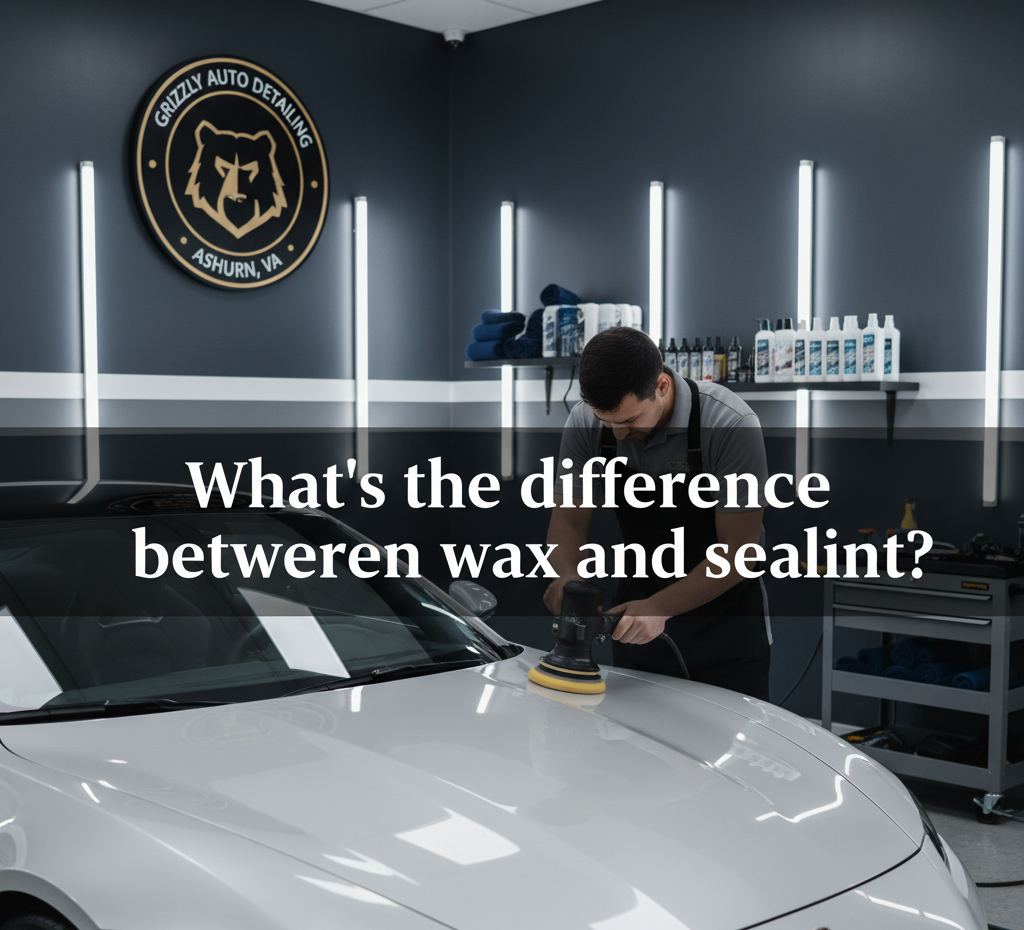
At Grizzly Auto Detailing in Ashburn, VA, we often hear customers ask: “Should I use wax or sealant on my car?” It’s an important question because both products protect and enhance your vehicle’s paint, but they work in different ways. Understanding these differences ensures your car always looks its best. Professional Wax polish Car Exterior Detailing in Ashburn gives your vehicle not only a mirror-like shine but also reliable protection from harsh environmental elements.
Understanding Car Wax
What Is Car Wax?
Car wax is a protective coating applied to your car’s paint to enhance its gloss and prevent damage from contaminants. Traditional waxes use natural carnauba—sourced from Brazilian palm leaves—while modern formulas often mix in synthetic polymers for improved durability.
Benefits of Wax
- Brilliant Shine: Wax creates a rich, warm glow that makes colors pop.
- Water Repellency: It helps water bead off the surface to prevent water spots.
- Surface Protection: Shields against UV rays, sap, bird droppings, and road grime.
- Minor Scratch Filling: Smooths out small swirl marks for a flawless look.
Types of Car Wax
- Carnauba Wax: Ideal for show-quality depth and warmth.
- Synthetic Wax: Longer-lasting protection with easier application.
- Spray Wax: Quick top-ups between full detailing sessions.
When to Use Wax
Wax is perfect for car owners who value beauty and shine. Moreover, it’s best used on vehicles that are regularly maintained and stored in garages or mild climates.
Understanding Paint Sealants
What Is a Paint Sealant?
Paint sealants are synthetic, polymer-based products that chemically bond to the paint surface. Unlike wax, which simply sits on top, sealants create a durable barrier that lasts for months.
Benefits of Sealants
- Extended Protection: Lasts four to twelve months, even under harsh conditions.
- Stronger Defense: Resists UV rays, acid rain, and road salt.
- Enhanced Gloss: Provides a bright, glass-like finish.
- Low Maintenance: Requires fewer reapplications than wax.
Types of Sealants
- Synthetic Polymer Sealants: Tough, weather-resistant coatings.
- Hybrid Sealants: Blend polymer protection with wax-like shine.
- Spray Sealants: Fast and easy for regular upkeep.
When to Use Sealants
Sealants suit daily drivers and vehicles exposed to outdoor elements. They’re excellent for owners who prefer durable protection over frequent detailing.
Wax vs. Sealant: Key Differences
| Feature | Wax | Sealant |
|---|---|---|
| Material | Natural or semi-synthetic | Fully synthetic |
| Durability | 4–6 weeks | 4–12 months |
| Finish | Warm, deep glow | Bright, reflective gloss |
| Protection Level | Moderate | High |
| Ease of Application | Requires buffing | Wipe-on, easy removal |
| Cost | Lower | Slightly higher due to longevity |
In short: Wax offers unmatched warmth and shine, while sealants deliver long-term protection.
Which Is Better for Your Car?
The choice depends on your priorities. If you love a soft, luxurious glow, wax is unbeatable. If you prefer long-lasting protection with minimal effort, sealant wins. Many detailers—including Grizzly Auto Detailing in Ashburn, VA—combine both: a base layer of sealant for durability, topped with wax for visual depth.
How to Apply Wax (Step by Step)
Step 1: Wash and Dry
Clean your car thoroughly with pH-balanced shampoo. Dry completely using a microfiber towel to prevent streaks.
Step 2: Prep the Surface
Use a clay bar to remove embedded contaminants. If needed, lightly polish to correct small imperfections.
Step 3: Apply Wax
- Use a soft foam applicator.
- Work in small, circular motions.
- Apply a thin, even coat across panels.
Step 4: Buff to Perfection
Let the wax haze for a few minutes, then buff using a clean microfiber towel. The result is a deep, glossy finish that feels silky smooth.
Step 5: Maintain Regularly
Reapply wax every month or so to preserve shine and protection.
How to Apply a Sealant
Step 1: Clean Thoroughly
Wash and dry your vehicle just like before. Any leftover wax or debris can prevent bonding.
Step 2: Apply the Sealant
- Shake the bottle well.
- Use a foam or microfiber applicator.
- Spread evenly in straight, overlapping lines.
Step 3: Let It Cure
Allow 10–20 minutes for the sealant to bond. Then gently buff the surface with a soft towel.
Step 4: Enjoy Long-Term Protection
Sealants can last for months, but washing your car regularly will help maintain the hydrophobic effect.
Combining Wax and Sealant
Using both is a detailer’s secret weapon:
- Start with a Sealant – This forms a durable protective layer.
- Finish with Wax – Adds warmth, depth, and rich shine.
This combination keeps your paint protected and stunning in every light.
Professional Product Recommendations
At Grizzly Auto Detailing, we trust only proven brands:
Recommended Waxes:
- Meguiar’s Gold Class Carnauba Plus
- Collinite 845 Insulator Wax
- Turtle Wax Hybrid Solutions
Recommended Sealants:
- Chemical Guys JetSeal 109
- Menzerna Power Lock Polymer Sealant
- Wolfgang Deep Gloss Paint Sealant
Expert Tips from Grizzly Auto Detailing
- Always start with a clean, smooth surface.
- Apply thin coats—more product doesn’t mean better results.
- Use quality microfiber towels to avoid scratches.
- Avoid direct sunlight during application.
- Maintain protection with gentle washes every week.
These professional habits ensure consistent, long-term results for Wax polish Car Exterior Detailing in Ashburn customers.
Practical Advice for Different Vehicles
- Sedans & Coupes: Wax provides a brilliant show-car finish.
- SUVs & Trucks: Sealant delivers rugged, long-lasting protection.
- Luxury Cars: Combine both for maximum depth and durability.
As a result, every vehicle type can achieve an ideal balance of shine and defense.
Internal & External Resources
- Learn more about our Professional Car Exterior Detailing in Ashburn.
- For more insights on car protection, visit Autogeek’s Detailing Guide.
Image Optimization Suggestion
Include a featured banner image (900×300 px) showing a detailer applying wax and sealant under bright studio lighting at Grizzly Auto Detailing.
Alt text: “Wax polish Car Exterior Detailing in Ashburn – Grizzly Auto Detailing.”
Frequently Asked Questions (FAQs)
1. What’s the main difference between wax and sealant?
Wax gives short-term shine; sealant provides long-term protection.
2. Can I layer wax over a sealant?
Yes. Apply sealant first for protection, then wax for enhanced gloss.
3. How long does each last?
Wax lasts around 4–6 weeks, while sealant can last up to a year.
4. Which is easier to apply?
Sealant is typically easier—just apply, cure, and buff.
5. Does wax protect from UV damage?
Yes, but sealants offer stronger UV defense.
6. Can I use wax on new paint?
Yes, after the paint fully cures (usually 30–60 days).
7. How often should I apply a sealant?
Every 6–12 months depending on climate and usage.
8. Do I need both wax and sealant?
For best results, yes—sealant for protection, wax for shine.
9. Are spray products as good as paste versions?
Sprays are convenient but slightly less durable.
10. Why choose Grizzly Auto Detailing for this service?
Our experts use premium products, advanced techniques, and deliver unmatched gloss and durability for every car.
Conclusion
Understanding the difference between wax and sealant helps you choose the best care for your vehicle. Wax enhances beauty and depth, while sealants offer unmatched protection. Combining both creates the ideal finish—glossy, smooth, and shielded from damage.
At Grizzly Auto Detailing, we specialize in Wax polish Car Exterior Detailing in Ashburn, providing top-tier results that keep your car looking brand new. Our skilled professionals use only the finest products to ensure long-lasting shine and superior protection. Book your detailing session today and experience the perfect balance of aesthetics and durability.