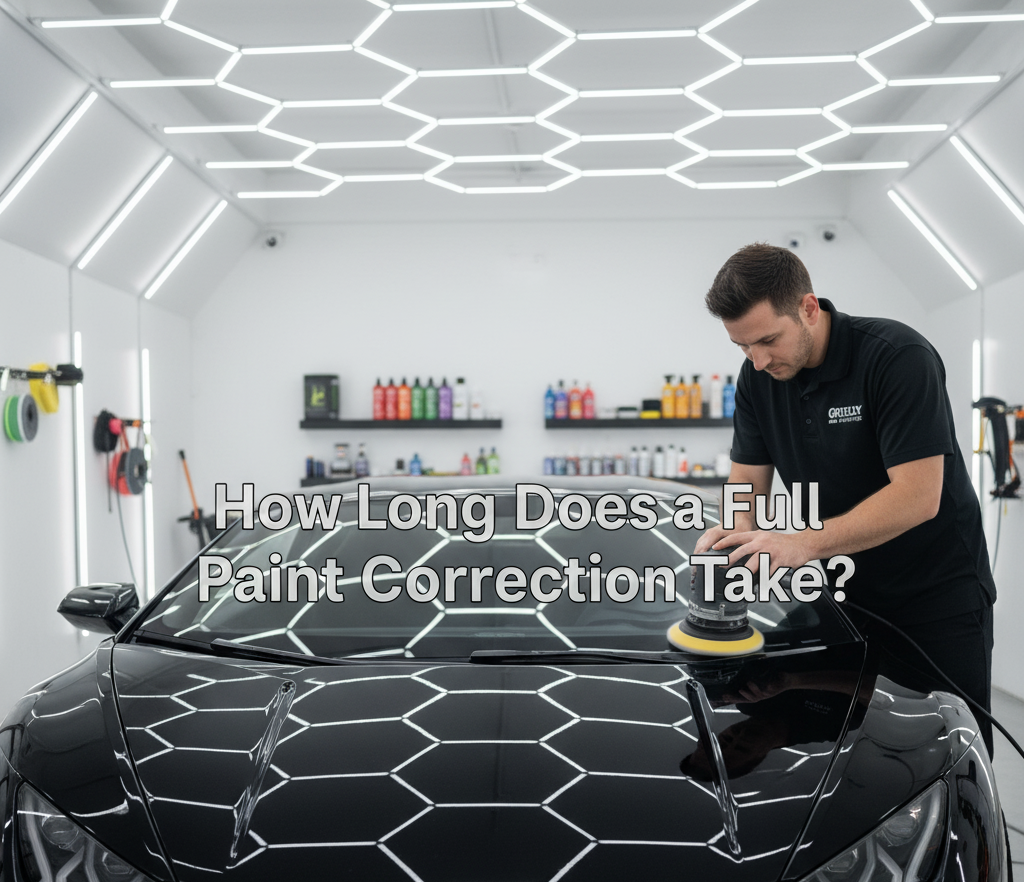
Car enthusiasts know that a flawless finish does more than just turn heads—it speaks volumes about care, pride, and precision. When vehicle owners in Ashburn want that showroom-level gloss, they often turn to Modern Paint Correction in Ashburn by Grizzly Auto Detailing. Yet, one of the most common questions drivers ask before booking a service is simple: “How long does a full paint correction actually take?”
To answer that, let’s break down every detail—from the process itself and the variables that influence timing to professional techniques that guarantee perfection.
Understanding What Paint Correction Involves
Paint correction is the meticulous process of leveling and refining a car’s clear coat to remove imperfections such as swirl marks, scratches, oxidation, and water spots. While washing and waxing can make a car look clean, paint correction restores the original depth and clarity of the finish.
However, not every paint correction is the same. Depending on the level of damage, the paint’s hardness, and the desired finish, technicians may use single-step, two-step, or multi-step correction methods—each requiring different levels of time and attention.
At Grizzly Auto Detailing, professionals performing modern paint correction in Ashburn approach every car with a systematic plan that blends art, science, and experience.
The Step-by-Step Process That Determines Time
Even though every job is unique, all complete paint correction projects generally follow the same key stages. Let’s explore how each step affects the total duration.
1. Deep Cleansing and Decontamination
Before any polishing begins, the car’s surface must be thoroughly washed and stripped of contaminants. This includes a foam pre-soak, a two-bucket hand wash, and a complete chemical decontamination using products like iron removers and tar solvents. Finally, technicians use a clay bar to remove embedded particles.
⏱ Estimated time: 1–2 hours
This stage sets the foundation. If contamination remains, polishing pads can pick it up and create fresh micro-scratches.
2. Paint Inspection and Assessment
Under LED lights or paint-correction inspection lamps, the detailing technician inspects every panel. They identify swirl marks, scratches, oxidation, and holograms. The goal is to determine the level of correction needed—light, moderate, or severe.
⏱ Estimated time: 30–45 minutes
This step also involves using a paint depth gauge to measure how much clear coat remains.
3. Test Spot and Product Selection
Before committing to a method, professionals test a small section of paint to see which combination of pad, compound, and polish yields the best results. Choosing the wrong combination can waste hours or risk paint damage.
⏱ Estimated time: 30 minutes
4. Correction Stages (The Most Time-Consuming Phase)
This is where the magic—and most of the time—happens. The technician uses a machine polisher to gradually remove clear coat layers that contain defects.
Single-step correction:
Used for newer vehicles or minor imperfections. The process involves one compound and polish pass to refine the surface.
⏱ Time required: 4–6 hours
Two-step correction:
Used for moderate swirl marks or oxidation. This stage includes compounding to remove heavy defects, followed by a finer polish to refine the finish.
⏱ Time required: 8–12 hours
Multi-step correction:
Reserved for severely neglected or dark-colored vehicles that show every flaw. This method requires several cutting and polishing stages.
⏱ Time required: 15–20+ hours
Professionals offering modern paint correction in Ashburn assess the paint condition early on, ensuring the method matches the car’s needs while balancing efficiency and safety.
5. Final Polishing and Finishing Touches
Once the correction stages are complete, a final refining polish enhances gloss and eliminates any light haze. The technician then performs a full panel wipe to remove polishing oils, leaving behind a crystal-clear, reflective surface.
⏱ Estimated time: 1–2 hours
6. Protection Application
After paint correction, the surface becomes more vulnerable to elements since the top layer of clear coat has been leveled. Therefore, professionals apply a high-grade sealant, wax, or ceramic coating to protect the finish.
⏱ Estimated time: 1–3 hours
Total Average Time Frame
Taking all stages into account, a full paint correction typically takes anywhere from 8 to 20 hours, depending on the car’s condition and the number of correction steps required.
However, at Grizzly Auto Detailing, modern paint correction in Ashburn isn’t rushed. The technicians emphasize perfection, not speed. Complex jobs on luxury cars or vehicles with hard paint, such as German makes (BMW, Audi, Mercedes-Benz), may take up to two full days for optimal results.
Factors That Influence Paint Correction Duration
1. Vehicle Size and Shape
Compact cars take less time than large SUVs or trucks due to surface area. A full-size vehicle might require twice as many passes during polishing.
2. Paint Type and Condition
Soft paint systems (like Japanese brands) correct faster but mar easily, while harder European clear coats require more time and pressure.
3. Desired Level of Perfection
A show-car finish demands multiple stages, while a daily driver may only need a two-step correction for a glossy improvement.
4. Environmental Factors
Temperature, humidity, and lighting conditions can affect polish performance. Controlled environments like Grizzly’s detailing bay ensure efficiency without compromising results.
5. Technician Experience
Skilled professionals can achieve high-level correction faster through refined technique, tool control, and knowledge of product behavior.
Tools and Products That Speed Up the Process
Modern technology has significantly improved correction efficiency. At Grizzly Auto Detailing, technicians rely on professional-grade tools and materials that balance speed and safety:
- Dual-action polishers for even correction and reduced risk of holograms.
- Microfiber cutting pads for faster defect removal.
- Advanced compounds like Meguiar’s M110 or Koch Chemie H8.02 for controlled cutting.
- Finishing polishes such as Sonax Perfect Finish for ultimate gloss.
- Inspection lights to ensure uniform correction across every panel.
This combination ensures that Modern Paint Correction in Ashburn consistently delivers superior results in the shortest practical timeframe.
Why Quality Always Trumps Speed
While it’s tempting to focus on how long a service takes, the truth is that paint correction is about precision—not haste. A rushed correction can introduce buffer trails, missed imperfections, or even burn through the clear coat.
Professional detailers at Grizzly Auto Detailing prioritize controlled pressure, panel-by-panel consistency, and safe heat levels. They understand that each car’s paint tells a story—and every swirl, mark, and defect deserves expert attention.
As a result, clients enjoy a finish that not only looks flawless but also lasts for years with proper maintenance.
Maintaining the Corrected Finish
After a professional paint correction, proper maintenance keeps the finish looking flawless much longer. Here’s how:
- Use pH-balanced car shampoos for regular washes.
- Avoid automatic car washes that use abrasive brushes.
- Dry with clean microfiber towels to prevent new swirl marks.
- Apply a ceramic coating to reduce future oxidation and improve hydrophobicity.
- Schedule maintenance detailing every 4–6 months for continued gloss retention.
These steps help preserve the results of modern paint correction in Ashburn and prevent the need for another correction in the near future.
The Value of Professional Paint Correction
Paint correction is not just a cosmetic upgrade—it’s a restoration of your vehicle’s identity. It protects long-term value, enhances aesthetic appeal, and prevents further clear coat degradation.
Drivers who invest in premium services like those offered by Grizzly Auto Detailing know they’re not just paying for shine—they’re paying for craftsmanship, durability, and expertise backed by professional certification and years of experience.
FAQs
1. How long does a single-stage paint correction take?
A single-stage correction usually takes around 4–6 hours, depending on the paint’s condition and size of the vehicle.
2. Does paint color affect correction time?
Yes, darker colors reveal imperfections more clearly and require more time for perfect results.
3. Can I drive my car immediately after correction?
Yes, but it’s best to avoid washing it or exposing it to heavy rain for 24 hours if a sealant or coating was applied.
4. What’s the difference between paint correction and polishing?
Polishing only enhances shine, while paint correction removes actual imperfections for a flawless finish.
5. How often should I get paint correction done?
Typically every 2–3 years, depending on driving habits and maintenance practices.
6. Does paint correction fix deep scratches?
It removes surface defects, but deep scratches that penetrate the clear coat may require touch-up paint or wet sanding.
7. How do I know if my car needs correction?
If you notice swirl marks or dull reflection under sunlight, your car likely needs professional correction.
8. Is paint correction safe for new cars?
Yes, but it should be done carefully by certified professionals to avoid removing unnecessary clear coat.
9. Will paint correction increase resale value?
Definitely. A professionally corrected car looks newer and cleaner and commands a higher resale price.
10. How do I find the best service for paint correction?
Choose certified experts like Grizzly Auto Detailing in Ashburn, who specialize in precision, technology, and customer satisfaction.
Final Thoughts
A full paint correction is an investment in your car’s beauty and value. Depending on the correction level and paint condition, it can take anywhere from 8 hours to two full days. However, when handled by professionals skilled in modern paint correction in Ashburn, the result is a flawless, mirror-like finish that reflects not only light but also the pride of ownership.