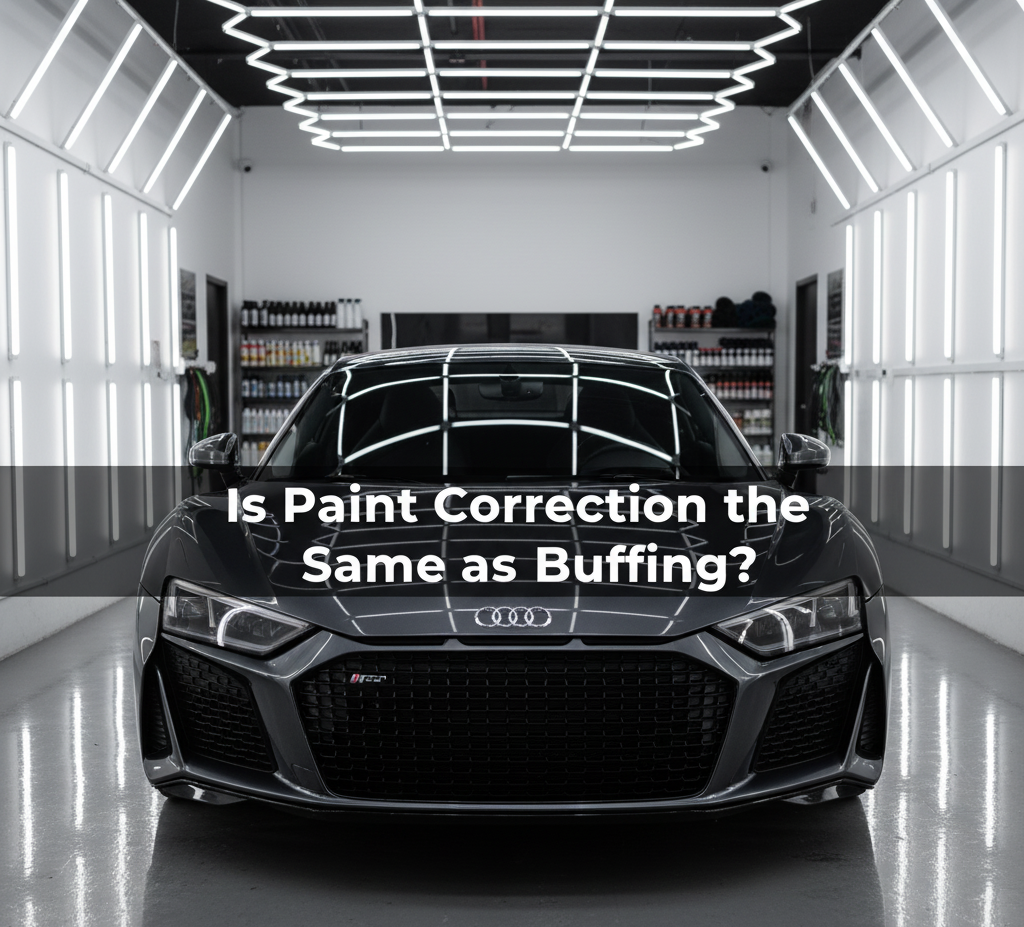
When it comes to restoring your vehicle’s finish, many car owners often wonder: is paint correction the same as buffing? At Grizzly Auto Detailing in Ashburn, VA, we frequently encounter this question. If you are searching for Affordable Paint Correction in Ashburn, you are in the right place. Understanding the differences between paint correction and buffing is crucial to making an informed decision and ensuring your vehicle achieves a flawless, long-lasting shine.
In this comprehensive guide, we will explore the distinctions, benefits, processes, and products involved. We will also provide actionable tips for maintaining your car’s finish, ensuring that every detail of your vehicle looks showroom-ready.
Understanding Paint Correction
Paint correction is a professional process aimed at restoring a car’s exterior paint to its original, flawless state. It involves the systematic removal of imperfections such as swirl marks, scratches, oxidation, water spots, and other defects that dull the paint’s surface.
Unlike simple washing or waxing, paint correction penetrates deeper, using abrasive compounds and polishing techniques to refine the paint at a microscopic level. This process improves clarity, color depth, and overall appearance, creating a high-gloss, mirror-like finish.
Key Objectives of Paint Correction
- Eliminate Surface Imperfections: Removes swirl marks, minor scratches, and etching caused by environmental exposure.
- Enhance Paint Depth: Restores the richness and clarity of the original paint.
- Prepare for Coating or Waxing: A properly corrected surface ensures optimal bonding for ceramic coatings, waxes, or sealants.
At Grizzly Auto Detailing, we prioritize precision and care, ensuring that each vehicle receives Affordable Paint Correction in Ashburn without compromising quality.
What Is Buffing?
Buffing is often mistaken for paint correction, but it is not the same. Buffing involves the mechanical polishing of a vehicle’s paint using a rotary or dual-action machine. Its primary goal is to create a smooth and shiny surface by removing light scratches and oxidation.
While buffing can enhance the appearance temporarily, it does not always address deeper paint imperfections. It is often used as a part of paint correction but not as a standalone solution for serious defects.
Differences Between Buffing and Paint Correction
| Feature | Buffing | Paint Correction |
|---|---|---|
| Purpose | Enhances shine, removes light scratches | Restores paint to near-perfect condition |
| Depth | Surface-level | Microscopic, multi-stage |
| Time Required | 1–2 hours | Several hours to multiple days |
| Tools | Polishing machine, pads | Polishing compounds, multiple pads, machine polishers |
| Results | Temporary improvement | Long-lasting, high-gloss finish |
As you can see, buffing alone cannot achieve the same results as professional paint correction.
The Paint Correction Process
Paint correction is a detailed, multi-step procedure that requires skill, patience, and the right products. Here’s a breakdown of how professionals like Grizzly Auto Detailing perform it:
Step 1: Thorough Vehicle Wash
Before correction, your car must be free of dirt, grime, and debris. Professionals perform a two-bucket wash using pH-balanced car shampoo. This step ensures that no contaminants scratch the paint during polishing.
Step 2: Paint Decontamination
Next, detailers remove bonded contaminants like tar, tree sap, and iron particles. They use a clay bar or chemical decontamination products. This step is essential because buffing or polishing over contaminants can damage the paint.
Step 3: Paint Inspection
Using specialized lights and magnification tools, experts identify defects such as swirl marks, scratches, oxidation, and etching. This inspection guides the correction process and determines the abrasiveness of compounds needed.
Step 4: Machine Polishing
At this stage, paint correction diverges from basic buffing. Professionals use various pads and compounds in multiple stages:
- Compounding: Removes deeper scratches and heavy defects.
- Polishing: Refines the paint surface for a smooth, even finish.
- Finishing: Enhances gloss and prepares the surface for coating or wax.
Step 5: Paint Protection
After correction, your car requires protection to maintain its appearance. Detailers apply a ceramic coating, sealant, or high-quality wax. This layer shields the paint from UV rays, contaminants, and minor scratches.
Step 6: Final Inspection
The last step ensures that every panel meets professional standards. Imperfections missed during polishing are corrected, leaving a flawless, mirror-like finish.
Common Misconceptions About Buffing
Many car owners believe that buffing is equivalent to paint correction. Let’s address common misconceptions:
- Buffing fixes all scratches: Buffing only addresses light surface imperfections. Deeper scratches require proper paint correction.
- Buffing is safe for all paints: Excessive buffing can thin the paint, especially on modern vehicles with delicate clear coats.
- Buffing is permanent: The results are temporary. Without proper protection, oxidation and minor scratches will reappear.
Understanding these misconceptions helps you avoid ineffective treatments and choose the right service.
Choosing the Right Products for Paint Correction
Professional paint correction relies on high-quality compounds, polishes, and pads. Here are some expert-recommended options:
- Compounds: Meguiar’s M105, Menzerna Heavy Cut Compound
- Polishes: Menzerna Super Finish 3500, Sonax Perfect Finish
- Pads: Foam cutting pads for compounding, microfiber finishing pads for polish
- Protectants: CQuartz Ceramic Coating, CarPro Reload Sealant
Using inferior products can lead to swirl marks, haze, or even paint damage, emphasizing the importance of hiring certified professionals.
Realistic Detailing Tips for Car Owners
Even after professional correction, maintenance is key. Here are actionable tips:
- Use Microfiber Towels: Avoid scratching the paint during washing or drying.
- Avoid Automatic Car Washes: Bristle brushes can cause swirls and scratches.
- Regular Waxing: Protects the paint and prolongs the results of correction.
- Park in Shade: Minimizes UV damage and oxidation.
- Quick Detailing Sprays: Keep your car shiny between washes.
These steps help your vehicle retain a showroom-quality finish longer, complementing the work done during paint correction.
The Cost of Paint Correction
The cost varies depending on vehicle size, paint condition, and correction stages. In Ashburn, VA, Affordable Paint Correction in Ashburn can range from $200 for minor corrections to $1,500+ for multi-stage, full-detail services.
Choosing professional services ensures you avoid paint damage, wasted money on temporary fixes, and inconsistent results. Investing in quality paint correction enhances your vehicle’s appearance and preserves its value.
Benefits of Paint Correction Over Buffing
- Long-lasting results: Paint correction restores paint at a deeper level.
- Enhanced appearance: Creates a reflective, high-gloss finish.
- Prepares for coatings: Essential before ceramic coating application.
- Corrects major defects: Swirls, scratches, oxidation, and more.
- Preserves paint integrity: Professional techniques avoid thinning clear coat.
Buffing alone cannot deliver these benefits, making paint correction the superior choice.
Expert Insights From Grizzly Auto Detailing
Our experts at Grizzly Auto Detailing emphasize that paint correction is not just a cosmetic service—it’s a precision art. When done correctly, it enhances your vehicle’s beauty and longevity. Our trained technicians combine skill, the right tools, and premium products to achieve flawless results.
We also tailor the correction process to each vehicle. Older vehicles with oxidized paint may require additional compounding, while newer cars may only need light polishing. This personalized approach ensures optimal results every time.
Maintaining the Results of Paint Correction
To ensure the longevity of your paint correction:
- Wash Regularly: Use pH-neutral car shampoos.
- Apply Wax or Sealant: Reinforces protection over the corrected surface.
- Avoid Harsh Chemicals: Prevent damage to paint or protective coatings.
- Use Proper Drying Techniques: Microfiber towels or air blowers reduce scratches.
- Schedule Periodic Touch-Ups: Maintain gloss and remove minor imperfections.
Following these guidelines ensures your car maintains a professional-grade finish long after the correction.
FAQs
1. Is buffing necessary for paint correction?
Yes, buffing is part of paint correction but is not the entire process. Proper correction uses multiple stages to achieve flawless results.
2. Can I do paint correction at home?
DIY correction is possible but risky. Without experience, tools, and products, you may damage your paint. Professional services are safer and more effective.
3. How long does paint correction last?
With proper maintenance, paint correction can last several years, especially when combined with protective coatings.
4. Will buffing remove deep scratches?
No, buffing only addresses light surface imperfections. Deep scratches require compounding and multiple-stage paint correction.
5. How much does paint correction cost?
Costs vary. Minor corrections start around $200, while full multi-stage correction can exceed $1,500, depending on the vehicle.
6. Can paint correction remove swirl marks?
Yes, professional paint correction effectively removes swirl marks, leaving a mirror-like finish.
7. What products are used in paint correction?
Professionals use compounds like Meguiar’s M105, polishes like Menzerna Super Finish, and pads suited for each correction stage.
8. Is paint correction safe for all cars?
Yes, when performed by trained professionals who assess paint thickness and condition before starting.
9. How often should I get paint correction?
Depending on vehicle use and exposure, every 1–3 years is recommended. High-traffic or outdoor vehicles may require more frequent correction.
10. Can I combine paint correction with ceramic coating?
Absolutely. Paint correction prepares the surface for ceramic coating, ensuring optimal adhesion and long-lasting protection.
Leave a Reply